Bhutan, a landlocked country in south-central Asia, is located on the eastern ridges of the Himalayas. One of the happiest countries in the world, Bhutan means ‘Land of Thunder Dragon’, earning its nickname because of the fierce storms that often roll in from the Himalayas. Until about 1960 the tempo of life in the Great Himalayas continued much as it had for centuries. Bhutan became less isolated in the second half of the 20th century becoming one of the most loved countries by tourists subsequently.

Thimpu is one of just two capital cities in Asia that does not have a single traffic light. (The other is Pyongyang, North Korea). The carefully crafted tour includes many cities and visits to places like Ta Dzong National Museum, Rinpu Dzong, Tashichho Dzong, Punakha Dzong, and Taktsang Monastery (Tiger’s Nest), among others. The package also has a visit to a local market and mini zoo where you can see the Takin, the national animal of Bhutan. A scenic drive to Dochula Pass from where you can see the range of Bhutanese Peaks.  A breathtaking view of the whole range of Bhutanese Himalayas is possible from the Dochula Pass on a clear day.

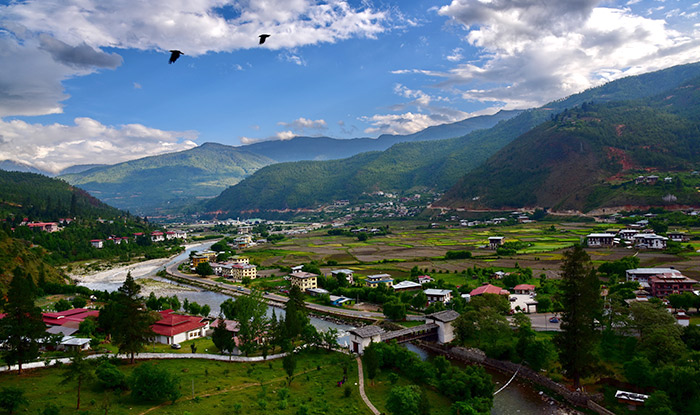
Picturesque valleys, enigmatic mountain ranges, rolling hills, its rich culture, and other touristic places in Bhutan have always attracted tourists from across the world. Blessed with century-old hilltop monasteries, Bhutan provides the peace and solace you desire during your visit. Friendly and welcoming people and delicious food will help further to make your visit a memorable one.
Itinerary

SWAGATAM

The trip to Paro is beautiful on a clear day, with views of major Himalayan peaks such as Everest, Kanchenjunga, and Makalu, as well as Bhutan’s high peaks, the sacred Jhomolhari, Jichu Drake, and Tserimgang, on the final approach. Your representative will meet you at the Paro airport after you have completed the airport formalities. Drive from Paro to Thimphu, Bhutan’s contemporary capital and an interesting mix of heritage and innovation.

Check into the hotel upon arrival. 


Afternoon stopover

*Thangtong Dewachen Nunnery, the Capital’s lone nunnery, is also known as Zilukha Anim Dratshang and is only a few minutes’ drive from town. Drubthob Rikey Jadrel, Thangtong Gyalpo’s 16th emanation, created it in 1976. You may engage with about 60 nuns who have dedicated their lives to spirituality and Buddhism.

Free or scheduled programmes can be organised. 

In the evening, you will drive to Mini Zoo to observe Takin, Bhutan’s national animal. This animal is only found in the Himalayan region and has the head of a goat and the body of a cow/yak. Before sunset, drive to Sangay gang view point (2685 metres) to see the entire Thimphu Valley and walk through hundreds of colourful prayer flags that dot the hill overlooking the Thimphu Valley.


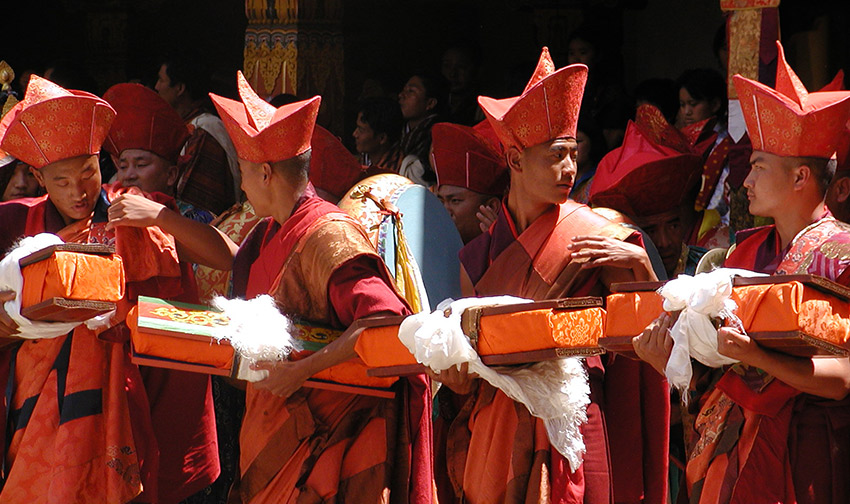
*Tashichho Dzong: The “fortress of the glorious religion” was established in 1641 and restored in the 1960s by King Jigme Dorji Wangchuck. Tashichho Dzong is home to several departments as well as His Majesty’s secretariat and the central monk body. It is open to visitors during the ThimphuTsechu (October festival) and while the monk body is residing in their winter quarters in Punakha Dzong. 

* Buddha Point (Kuesel Phodrang) You can pay your respects and offer prayers to the Buddha, the country’s largest statue, before walking about. The area also offers a beautiful view of the Thimphu Valley from the west. 


Overnight stay at Hotel

Thimphu, possibly the world’s most peculiar capital city, serves as the seat of government. Bhutan’s royal family, the public service, and foreign missions with a presence in Bhutan are all housed in this bustling town. It also serves as the headquarters for several international development programmes.

The following places will be visited during today’s full day of sightseeing in Thimphu Valley:

Visit the National Memorial Chorten, which was envisioned by Bhutan’s third king, His Majesty Jigme Dorji Wangchuck, who intended to establish a memorial to world peace and prosperity. It is both a memorial to the Late King (“the father of modern Bhutan”) and a monument to peace, having been completed in 1974 after his unexpected death.

Hindu Temple: His Majesty the King’s beautiful gift to our Hindu people, the mandir, is destined to become yet another stunning pilgrimage place in the Kingdom.

* Folk Heritage and Textile Museums: Both of these museums, which opened in 2001, offer fascinating insights into Bhutanese material culture and way of life.

* Handicrafts Emporium: This government-run enterprise sells a broad variety of hand-woven fabrics and craft items. It also has a small literature collection on Bhutan, Buddhism, and Himalayan culture.

* National Library: Houses a large collection of Buddhist texts and manuscripts, some dating back hundreds of years, as well as modern academic pieces primarily on Himalayan culture and religion. Closed on Saturdays, Sundays, and Government Holidays.

* Institute for ZorigChusum: Also known as the Painting School, the Institute offers a six-year study in Bhutan’s 13 traditional arts and crafts. During a tour, pupils may be seen practising the many skills taught at the institution. Sun / Government Holidays / Saturday (10 am-12 pm)

*Changangkha Lhakhang: The oldest temple in Thimphu, which was established in the 12th century, hovers above Thimphu, near Motithang, on a ridge. Lama PhajoDrukgomZhigpo, who arrived in Bhutan from Ralung in Tibet, picked this location for the construction of this Lhakhang. The primary statue of the Lhakhang is Chenrizig, an 11-headed, thousand-armed incarnation of Avolokitesawara. This Lhakhang’s prayer books are larger than standard Buddhist literature. There are big prayers inside the Lhakhang and little prayers on the walls outside.

Overnight stay at Hotel.


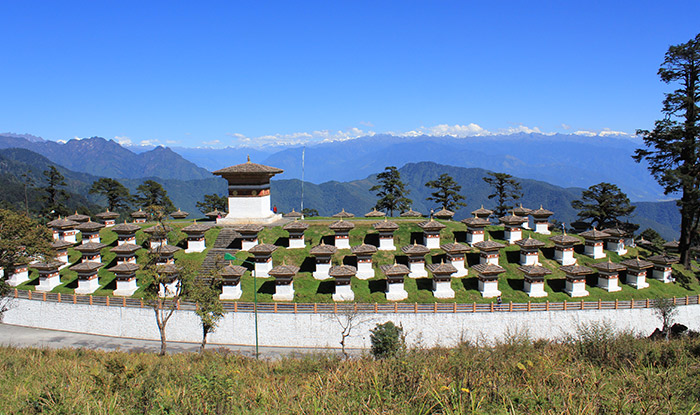
Drive to Dochu-la pass (3,088m/10,130ft) after an early breakfast, stopping momentarily to take in the scenery and see the chortens, Mani walls, and prayer flags that adorn the highest point on the route. The tall Himalayan peaks in the northeast will be visible in all their splendour if the skies are clear. From left to right, the peaks that can be viewed from this pass on a clear day are: The highest peak in Bhutan, Gangkar Puensum, is 7,497 metres high. Other prominent peaks are Masagang (7,158 metres), Tsendegang (6,960 metres), Terigang (7,060 metres), Jejegangphugang (7,158 metres), Kangphugang (7,170 metres), and Zongaphugang (7,060 metres).

Then carry on your journey to Punakha Valley. The JeKhenpo (Chief Abbot) and the main monk body still spend the winter at Punakha, which was the capital of Bhutan until 1955. Hike to the adjacent Chimi Lhakhang, a shrine honouring the “Divine Madman,” a quirky monk from the 16th century well-known for his countless entertaining Rabelaisian folktales. After Lunch, Visit Talo (Punakha)

Talo is renowned among Punakha communities for its nice and tidy appearance. Talo is situated on a ridge above the Punakha Valley at an elevation of around 2,800 metres. Built on a tiny plateau at the top of the hamlet, TaloSangnacholing offers a magnificent view of the entire valley, its surrounding communities, and the tall hills beyond Wangduephodrang, which serve as a gateway to central Bhutan. The women in this town are extremely beautiful. Punakha is around an hour’s drive from Talo.

Rest of the day at leisure.

Overnight stay at Hotel.


You’ll start your day by hiking up through rice fields along the banks of the Mo Chhu to the top of the valley, where you’ll find the majestic KhamsumYuelleyNamgyal Chorten, a stunning monument recently built by the Queens and consecrated in 1999.


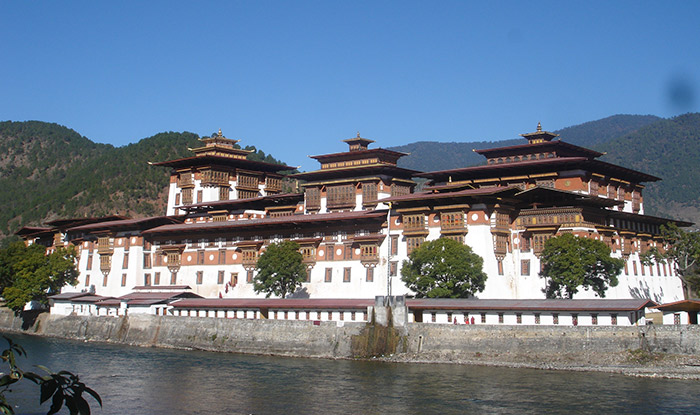
You will next visit the Punakha Dzong after lunch. It was built in 1637 by ShabdrungNgawangNamgyal and has since played an important role in the civil and religious life of the country. It has been devastated by fire, flood, and earthquakes over the years, but it has now been completely restored to its former beauty.


A stroll through the town in the evening.

Overnight stay at Hotel.


After breakfast, return to Paro via Simtokha Dzongwich, Bhutan’s oldest fort, which was erected in 1627 by Zhabdrung Ngawang Namgyel, Bhutan’s unifier.


Tachogang Lhakhang 

On the route to Thimphu, Tachogang Lhakhang is situated in the Paro district. ThangthongGyelpo founded it after having a vision of Guru Rinpoche, Amitabha, and Avalokiteshvara close to the location. Today’s carers are thought to be ThangtongGyelpo’s descendants. The master’s relics, including his walking stick, can be seen inside the temple.


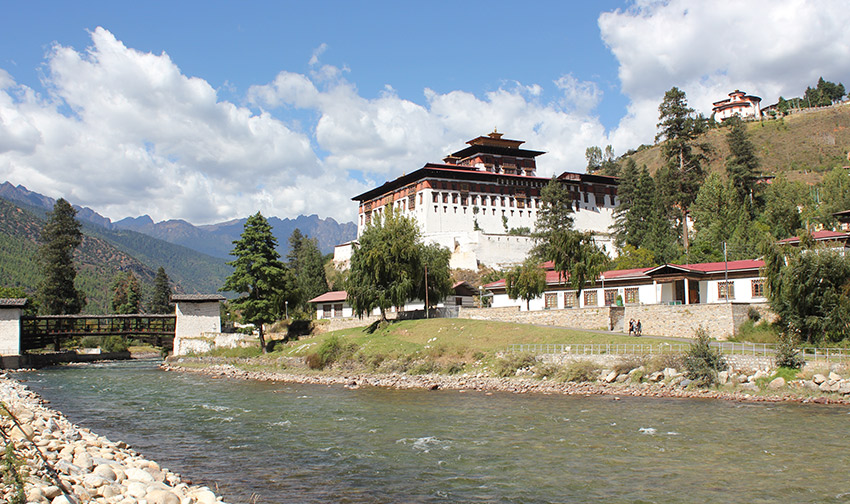
in the Afternoon, drive to the Ta Dzong, a historic watchtower that is now the National Museum, near the northern end of the valley. Ancient Bhutanese artwork and artefacts, as well as weaponry, coins, stamps, and a modest natural history collection, are all included in the museum’s collection. Next, go to Rinpung Dzong (Paro Dzong), which is perched high above the Paro Valley. This Dzong, which ShabdrungNgawangNamgyal constructed in 1646 and currently serves as the administrative and religious hub of the Paro Valley, also houses the monk body and the civil administration offices.


You will go to Drukgyel Dzong in the evening, a crumbling castle where Bhutanese defenders once repelled Tibetan invasions. The sacred “mountain goddess” Chomolhari’s snowy dome can be seen from the approach road to the Dzong in all her splendour.

Visit the Kyichu Lhakhang, one of the 108 temples the Tibetan ruler Songtsen Gampo erected in the Himalayas in the seventh century. Buddhism was first practised in Bhutan with the construction of this temple.


 In leisure, enjoy an evening stroll along the main street and perhaps stop by a few handicraft stores.


Overnight stay at Hotel.

We get up early to travel through the Chele-la pass to Haa. After travelling 4 kilometres to Bondey Village, we turn onto a side road and start the 45-kilometre ascent through a forest of blue pine and rhododendrons to Chele-la (3,810m/12,573ft). If the weather is good, we will stop here for a short while to roam around and take in the beautiful mountain landscape. On a clear day, there is a fantastic view of Mt. Chomolhari and Jichu Drake from this position.


 Then continue to Haa (2670m/8,811ft), descending for another 22 km., finally reaching Haa after about an hour’s drive.


After lunch, we tour Lhakhang Karpo (White Temple) and Lhakhang Nagpo (Black Temple), two renowned monasteries. According to legend, the Jowo temple in Lhasa and the principal shrine at Lhakhang Nagpo are virtually similar. In the words of the legend, local deities helped to build Lhakhang Karpo. As a result, the area became known locally as “Hay” (meaning “surprise”), which later changed to “Haa” as a result of changing pronunciations and interpretations over time.


Particularly following the event of the construction of the Lhakhang Karpo, the three enormous hills looming over the edges of the Haa valley were dubbed “Me Rig Puen Sum.” The three hills are now commonly referred to as “RigSumGoenpa,” which represents the three deities Jambayang, Chana Dorji, and Chenrezig (also known, respectively, as Manjushri, Varjapani, and Avalokiteshvara in Sanskrit). Among the 1,000 future Buddhas, these three are the main bodhisattvas (Buddhas to be), and every Lhakhang (temple) and home shrine room contains images of them. 


Later, Buddhist saints like Guru Rinpoche and “MachiLabdorn” visited Jungney Drag in Haa and bestowed their blessings on the area. In the early 17th century, ShabdrungNgawangNamgyal united the nation under the Drukpa Kagyupa sect of Mahayana Buddhism, and ApChundu became the principal protector god of Haa.


Evening, drive back to Paro. 

Overnight stay at Hotel.

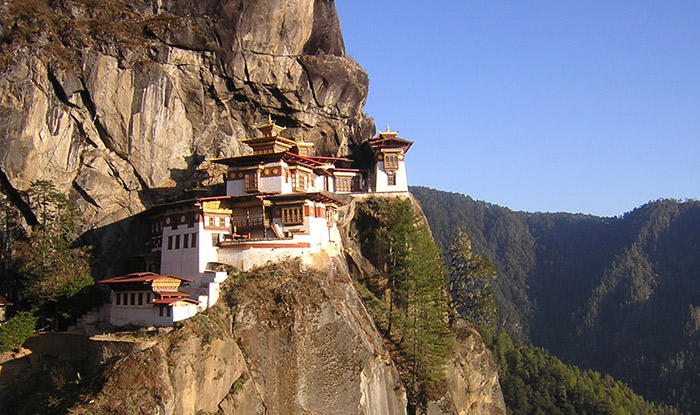
Take a trip to Taktsang Monastery, also known as Tiger’s Nest, in the morning. Guru Rinpoche, the founder of the Mahayana branch of Buddhism practised in Bhutan, is said to have travelled here on the back of a tigress and meditated at this monastery. The complex’s main structure suffered significant fire damage in 1998, but following years of meticulous restoration work, it has now been entirely brought back to its former splendour. 

Overnight stay at Hotel.

After an early breakfast at the hotel, drive to the airport for a flight to your onward destination. Your escort will help you with exit formalities and then bid you farewell.

SUBHA YATRA

Trip Gallery

Similar Trips

GLIMPSES OF BHUTAN

GLIMPSES OF BHUTAN

ACROSS THE MIGHTY HIMALAYAS

ACROSS THE MIGHTY HIMALAYAS

Sri Lanka

Sri Lanka